Fake university and college certificates in India in 2026 came in four forms: a genuine certificate used by someone else, a forged copy of a real board or university document, a certificate from an institution that does not exist, and a paid doctorate from a body with no power to award one. In October alone, cases surfaced in Uttar Pradesh, Bihar, Jammu and Odisha. Most were caught when someone checked the paper against the issuer's records instead of taking it at face value. This guide explains how the rackets worked and what universities, colleges and employers can do to stop them at the source.
Four patterns behind the 2026 cases
Most of these cases are still before investigators or courts. What they share is an office that accepted a paper or a scan at face value, sometimes for years.
1. A genuine certificate, used by the wrong person
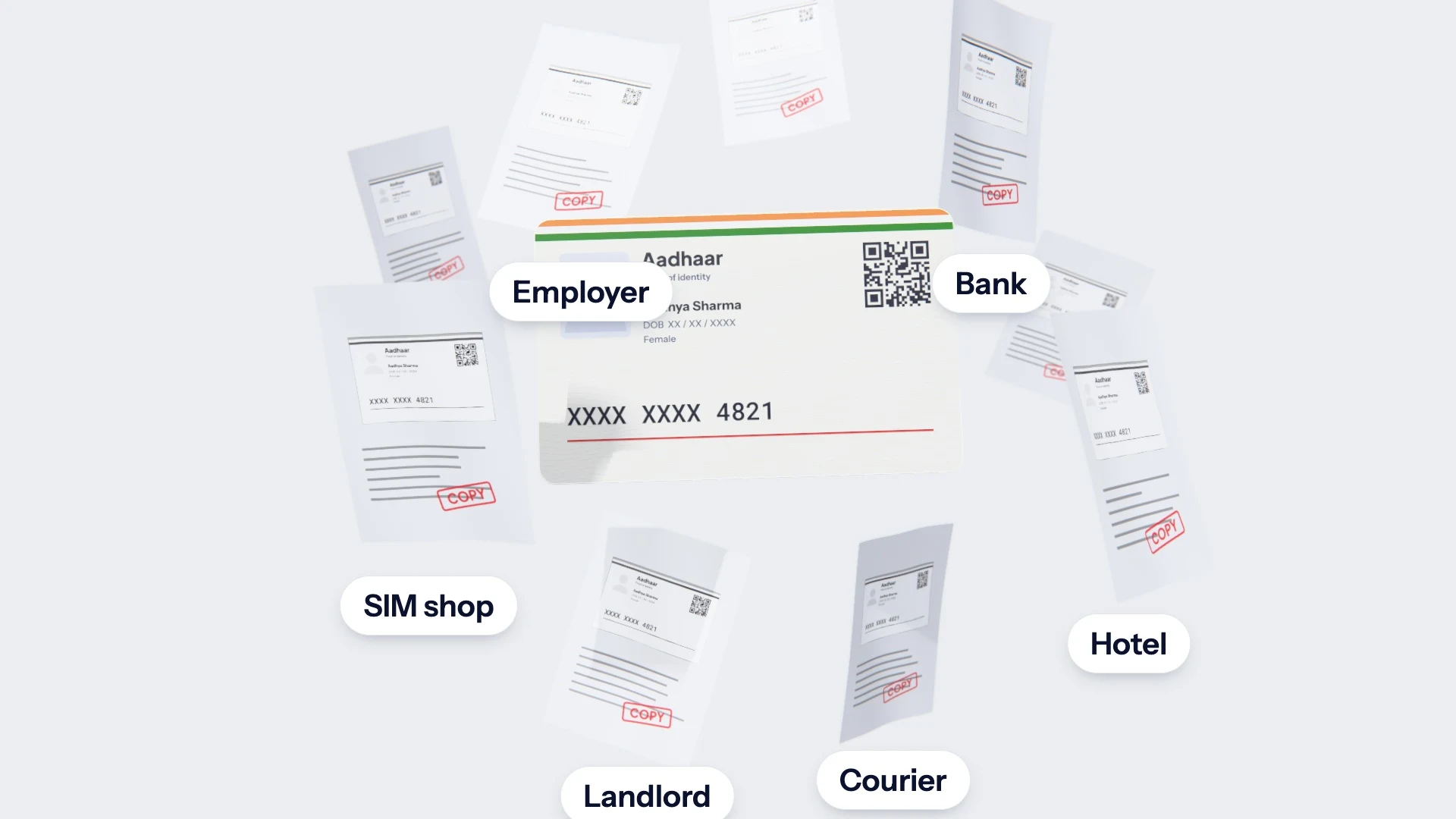
In Uttar Pradesh, a teacher's own writ petition in the Allahabad High Court led to a statewide order. The state's Special Task Force told the court that the petitioner had obtained the job using the educational documents of another woman, who serves as an assistant teacher in Gorakhpur district. The court recorded that the Task Force's investigation had found many teachers in the state employed on forged documents or on someone else's documents, and that in several instances ten or more people had obtained jobs against a single set of educational documents.
In its order of 16 October 2026, the court directed every teacher of Classes 1 to 8 to submit their appointment letter and educational documents, from high school through graduation, B.Ed. or BTC and TET or CTET, to the district Basic Shiksha Adhikari within a week of being notified. District offices are to compile the details and send them to the Task Force's range offices for verification. The case returns to court on 4 November 2026.
A borrowed certificate is genuine. The board and the university will confirm it, because they issued it. What fails is the link between the record and the person holding it.
2. A forged copy of a real board or university document
In Buxar, Bihar's Vigilance Investigation Bureau sent the TET and academic certificates of serving teachers to the boards and universities that had supposedly issued them. For five teachers, the documents came back as forged, Prabhat Khabar reported on 25 October 2026. FIRs have been filed, and the district education office has told the employing units to act. Termination is to follow, and the department is preparing to recover the salaries paid.
Buxar is part of a statewide exercise. In July 2026, Bihar's Education Minister said the state would dismiss more than 3,000 teachers accused of getting jobs with fake degrees and forged certificates, after a Vigilance Bureau probe of recruitment carried out between 2006 and 2015. Officials said investigators had found certificates issued by fake colleges as well as forged qualifications, and that salaries and honorariums would be recovered with interest.
In Jammu, the Crime Branch's Economic Offences Wing chargesheeted a health department employee who allegedly got a dental assistant's job nearly two decades ago with a forged Class 10 certificate. The forensic laboratory found erasures and chemical alterations on the mark sheet, and investigators say he had passed Class 8 but never cleared Class 10.
A forged copy can look right for a long time. The Jammu certificate passed for nearly two decades. It failed when investigators compared it with the school's own records.
3. A certificate from an institution that does not exist
Some certificates carry the name of an institute that was never there. In a judgment reported on 17 October 2026, the Punjab and Haryana High Court upheld the removal of a Punjab ETT teacher who had joined in December 2006 on a diploma in elementary education from an institute that did not exist. The bench held that such an appointment is invalid and cannot be saved by long service or by a qualification earned later.
The University Grants Commission publishes a state-wise list of fake universities. The current list, dated February 2026, names 32 institutions. It lists known offenders, so an institution's absence from it proves nothing.
4. Paid titles from bodies with no power to award them
The cheapest end of the market sells titles rather than jobs. In Berhampur and other parts of southern Odisha, people were reportedly being phoned and offered doctorate degrees for as little as Rs 7,000, without any of the usual academic requirements, according to an OdishaTV report of 23 October 2026. The report said such certificates cost about Rs 2,500 a few years ago.
The law here is clear. Under section 22 of the University Grants Commission Act, 1956, the right to confer degrees belongs to universities set up by a Central, Provincial or State Act, institutions deemed to be universities, and institutions that an Act of Parliament has specifically authorised to grant degrees. No one else may confer a degree or claim the right to do so. Section 23 bars any other institution from using the word "University" in its name. A doctorate on a CV deserves the same question as a bachelor's degree: who awarded it, and were they allowed to?
Why a missed check keeps costing
Fake certificates are rarely caught at the door. They surface years later, when a court, a vigilance probe or a complaint forces a recheck. The Bihar probe covers recruitment between 2006 and 2015, the Jammu employee had served for nearly two decades, and the Punjab teacher had joined in 2006. By then the employer has paid years of salary.
Courts are also looking at the officials who let such appointments through. In January 2026, another bench of the Allahabad High Court directed Uttar Pradesh's Principal Secretary of Basic Education to act against teachers appointed by fraud, including cancelling appointments and recovering salary wherever permissible, and to start disciplinary and penal action against officials who colluded with or deliberately ignored them. The cheapest check is the one made before the offer letter.
What employers can do
- Verify with the issuer, not the copy. Ask the university, college or board that issued the certificate to confirm it, with the candidate's written consent. A scan, a photocopy or even an attested copy shows what the candidate handed over, nothing more.
- Match the person to the record. Compare name, father's name, date of birth, roll number and year of passing with the issuer's confirmation, and confirm the candidate's identity separately. This is what catches a borrowed certificate.
- Check that the issuer can award the qualification. Look the institution up on the UGC lists, and confirm a college's affiliation with its university for the year of passing.
- Check every qualification the decision rests on. That includes the ones that earn extra marks, higher pay or eligibility, such as a TET, a diploma or a doctorate, as well as the highest degree.
- Re-verify existing staff where a qualification is a legal or safety condition. Teaching, health care and security roles are natural starting points. Run it as a planned exercise: tell employees what will be checked and why, take consent, verify with issuers, and give anyone with a mismatch a fair chance to explain before you act. As the Uttar Pradesh case shows, a name match on its own proves little.
- Keep the evidence. File each issuer's confirmation, with its date, against the employee record, so you can show what was checked and when.
What universities and colleges can do
Most of the cases above turned on an issuer's record. A university or college that answers verification requests promptly, from its own records, is the strongest defence an employer has. Three steps help.
- Make confirmation easy to find. Publish one verification contact or portal on the institution's website, so employers do not write to an address a forger has supplied.
- Issue certificates that can be checked at the source. A certificate with a QR check against the issued record shows at once whether the copy in hand matches what the institution issued. Our page for universities and colleges explains how this fits a registrar's office.
- Act when your name is misused. If forged certificates carrying your name or seal appear, tell the police and the employer who raised the query, and keep a record of every forged copy you see.
A quick reference
| Pattern | What a visual check misses | What stops it |
|---|---|---|
| Genuine certificate, wrong person | Everything, because the document is real | Matching the person's identity to the issuer's record |
| Forged copy of a real certificate | A good forgery looks right | Confirmation from the issuing board, university or college |
| Institution that does not exist | A plausible name and seal | The UGC lists and a check that the issuer exists |
| Paid doctorate | An impressive title | Checking that the body can legally award degrees |
How TheRollNumber helps
On Checkkbox, employers and verification agencies run education checks with the issuing institution, alongside identity, employment and court record checks, with the results in one report. On Dygital.degree, universities and colleges issue certificates in the NAD standard format, signed by the Registrar, Controller of Examinations and Vice-Chancellor and anchored on Hyperledger. Each certificate carries a QR check, and any change to an issued certificate makes that check fail. Students are notified and fetch their certificates into ADi Wallet, so they can share the verified record instead of a scan. More than 150 verification agencies verify academic records on Checkkbox, and more than 20 universities and colleges issue on Dygital.degree (company data, October 2026).
If you run a registrar's office or a hiring team and want to see how source checks and verifiable certificates would work for you, talk to us.
Sources
- High Court of Judicature at Allahabad, Kusumlata v. State of U.P. and 2 Others, Writ-A No. 11906 of 2026, order dated 16 October 2026 (copy published by LiveLaw), October 2026
- Prabhat Khabar (Hindi), "Fake teachers caught: action in Buxar", October 2026
- ETV Bharat, "Bihar To Dismiss Over 3,000 Teachers With Fake Degrees, Forged Educational Certificates: Minister", July 2026
- Greater Kashmir, "J-K Crime Branch files chargesheet against health worker over alleged forged Class 10 certificate", October 2026
- LiveLaw, "Fake Degree From Non-Existent Institute Can't Validate Appointment", October 2026
- University Grants Commission, "Fake Universities: state-wise list as on February 2026", accessed October 2026
- OdishaTV, "Fake doctorate degrees for Rs 7,000? Suspected racket surfaces in Odisha", October 2026
- University Grants Commission, "The University Grants Commission Act, 1956", accessed October 2026